
 By admin
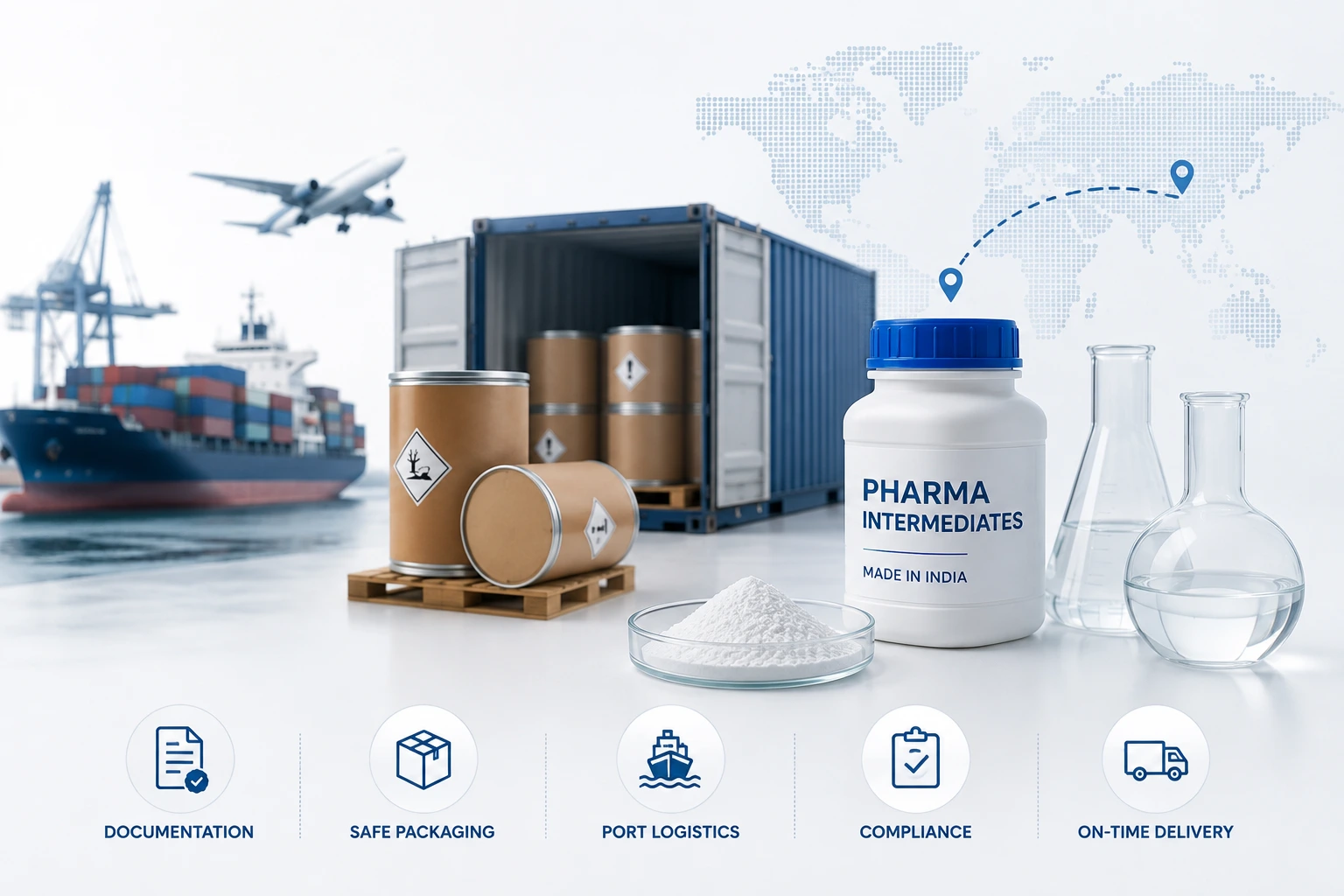
Importing pharmaceutical intermediates from India requires three things done right: export documentation (Certificate of Analysis, MSDS, Bill of Lading, and often a Certificate of Origin), UN-compliant hazardous packaging suited to the compound’s reactivity class, and a realistic port-to-delivery timeline that usually runs 3–6 weeks depending on destination and mode of freight. Get any one of these wrong, and a shipment that should take a month can sit in customs for two.
If you’ve sourced chemicals internationally before, you already know the fear: a container held up at port because one document was missing a stamp, or a drum that didn’t survive the crossing because it wasn’t packed for a reactive compound. When it comes to pharmaceutical intermediates from India specifically, there’s genuinely useful ground to cover before you place your first order, because the process has real, specific requirements that differ from importing finished goods or even from importing bulk commodity chemicals.
This guide walks through exactly what happens between “placing the order” and “product on your dock,” so you know what to ask your supplier for and what to expect at each stage.
Why India, and Why This Actually Matters to Get Right
India now accounts for a significant share of the world’s bulk drug and intermediate supply, and buyers moving away from single-source dependency are increasingly looking here for both cost and reliability reasons. But sourcing decisions don’t end once you’ve picked a supplier. The logistics layer, documentation, packaging, and port handling, is where a lot of otherwise-solid sourcing relationships run into friction, simply because buyers don’t always know what to ask for upfront.
The good news: none of this is complicated once you know the checklist. It’s just rarely explained clearly.
The Documentation You Actually Need
Every shipment of pharmaceutical intermediates leaving India needs a specific documentation package, and it’s worth confirming each of these with your supplier before the order is even confirmed, not after the goods are packed.
Certificate of Analysis (COA): batch-specific test results confirming purity, related substances, and other specifications against the agreed quality spec. This should always match the batch number on your shipping documents.
Material Safety Data Sheet (MSDS/SDS): required for customs clearance and for your own internal handling and storage compliance once the goods arrive.
Commercial Invoice and Packing List: standard for any international shipment, but for chemical intermediates these need to correctly declare the HS (Harmonized System) code specific to the compound, since misclassification is one of the most common causes of customs delays.
Certificate of Origin: especially relevant if your country has preferential trade terms with India, or if your own regulatory filing requires documented country-of-origin traceability.
Bill of Lading (BL) or Airway Bill (AWB): issued once the goods are handed to the freight carrier, this is your proof of shipment and is needed to release goods at the destination port.
Dangerous Goods Declaration (if applicable): many pharmaceutical intermediates are classified as hazardous or reactive for transport purposes, which triggers additional documentation under IMDG (sea) or IATA (air) regulations.
A reliable supplier should be able to hand you this full set without you having to chase for individual pieces mid-shipment. If a supplier seems unclear on which documents apply to your specific compound, that’s worth treating as a flag.
Packaging: Not a One-Size-Fits-All Question
This is where a lot of first-time importers get caught off guard. Pharmaceutical intermediates aren’t packed like generic industrial chemicals, and how a compound is packaged depends heavily on its reactivity, moisture sensitivity, and hazard classification.
What typically determines packaging choice:
- Reactivity and stability moisture-sensitive or air-sensitive intermediates need nitrogen-purged or sealed containers, not standard drums
- UN hazard classification reactive or flammable compounds require UN-certified packaging rated for that specific hazard class, tested for drop, stack, and pressure resistance
- Quantity and container type smaller R&D quantities often ship in HDPE containers or fiber drums, while bulk orders typically move in properly lined MS or HDPE drums suited for export
- Climate exposure during transit temperature-sensitive compounds may need insulated or temperature-controlled containers, particularly for longer sea freight routes
The packaging your supplier chooses should be documented on the shipping papers, matching UN packing group requirements where applicable. If you’re importing a compound for the first time, it’s worth asking your supplier directly how they’ve packaged it for previous export shipments, since a repeat process is a good sign of experience with that specific molecule.
Port Logistics: What Actually Happens After the Order Is Confirmed
Here’s a realistic walk-through of the timeline, since this is usually the part buyers have the least visibility into.
Production and QC: the batch is manufactured and tested, with the COA generated once results are confirmed against spec.
Packing and documentation prep: goods are packed per hazard classification, and the full documentation set is prepared and cross-checked against the batch.
Domestic transport to port : goods move from the manufacturing facility to the nearest export port, typically Mumbai (JNPT/Nhava Sheva) for sea freight from Maharashtra-based manufacturers.
Customs clearance and vessel booking : export customs clearance in India, combined with vessel space booking, which can shift depending on shipping line schedules.
Transit time : this varies enormously by destination and mode. Air freight is faster (3–7 days) but far more expensive for bulk chemical shipments; sea freight is standard for bulk orders but takes considerably longer depending on the destination port.
Destination customs clearance : this depends entirely on your own country’s import requirements and how complete your documentation package is. This is also where a missing or mismatched document tends to cause the most delay.
What to Ask Your Supplier Before You Place the Order
A few honest questions worth putting to any supplier before you commit:
- Can you provide the full documentation set (COA, MSDS, Certificate of Origin, correct HS code) before the shipment ships, not after?
- How is this specific compound packaged for export, and has it shipped successfully to my region before?
- What’s your realistic port-to-departure timeline, separate from production time?
- Do you handle Dangerous Goods Declaration paperwork in-house, or does that fall on the freight forwarder?
- Who’s my point of contact if customs raises a query on arrival?
At Advance Pharma Chem, this is a routine part of how we work with international buyers. Our reaction capabilities and production processes are built around export-ready documentation and hazard-compliant packaging from the start, not added as an afterthought once an order is confirmed.
Frequently Asked Questions
1. What documents are required to import pharmaceutical intermediates from India?
At minimum, you’ll need a Certificate of Analysis, MSDS, Commercial Invoice with correct HS code, Packing List, Bill of Lading or Airway Bill, and Certificate of Origin if relevant to your trade terms. Hazardous compounds also require a Dangerous Goods Declaration.
2. How are reactive or hazardous pharmaceutical intermediates packaged for export?
Packaging is chosen based on the compound’s UN hazard classification and reactivity, typically UN-certified drums or containers tested for drop, stack, and pressure resistance, with moisture- or air-sensitive compounds requiring sealed or nitrogen-purged packaging.
3. How long does it take to import pharmaceutical intermediates from India?
Sea freight shipments typically take 15–35 days door-to-door depending on destination, while air freight can arrive in 3–7 days but at a significantly higher cost, making it more common for smaller R&D-quantity orders.
4. What’s the most common cause of customs delays for chemical imports?
Incorrect or mismatched HS codes on the commercial invoice are one of the most frequent causes, along with incomplete Dangerous Goods documentation for hazard-classified compounds.
5. Can a supplier handle both documentation and freight forwarding, or are these separate?
This varies by supplier. Some manufacturers handle documentation in-house and coordinate directly with freight forwarders, while others expect the buyer to manage freight separately. It’s worth clarifying this upfront so nothing falls into a gap between the two.
Getting the Logistics Right the First Time
None of this documentation, packaging, or port timelines is complicated once you know what to ask for. What trips up most first-time importers isn’t the process itself, it’s not knowing which questions to ask their supplier before the order is confirmed, when there’s still time to fix a gap. A supplier who can hand you a complete documentation set upfront, explain exactly how your specific compound is packaged, and give you a realistic timeline separate from production time is telling you something important about how they operate not just for this shipment, but for every one after it.
If you’re planning your first import of pharmaceutical intermediates from India, the goal isn’t to become a logistics expert yourself. It’s to know enough to ask the right questions and recognize a supplier who already has good answers.
Leave A Comment
You must be <a href="https://advancepharmachem.in/wp-login.php?redirect_to=https%3A%2F%2Fadvancepharmachem.in%2Fblogs%2Fimporting-pharmaceutical-intermediates-from-india-documentation-packaging-port-logistics-explained%2F">logged in</a> to post a comment.